
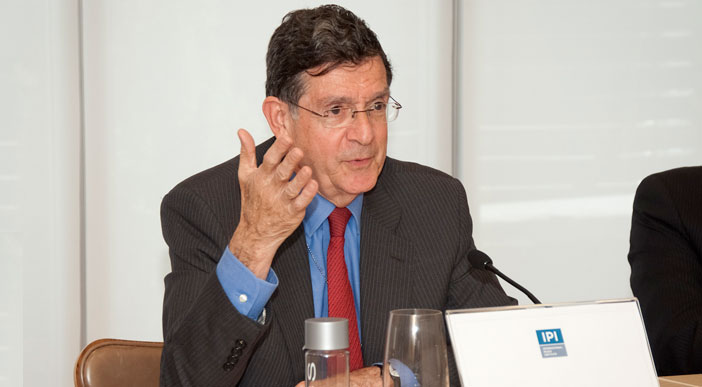
A policy discussion around a new IPI report on UN Security Council strategies for managing civil wars included comments by Ambassador Gert Rosenthal of Guatemala, who called the report “fascinating” and said that “it shows a Security Council which is continually evolving.”
The report’s findings were presented at the September 14th event by Christoph Mikulaschek, IPI Senior Policy Analyst. Mr. Mikulaschek’s analysis summarized the report, which presents insights from a new dataset compiled at IPI. The report and the discussions at the policy forum illustrate that the UN Security Council has been moving from a stance of nonengagement with civil wars to one of systematic engagement with internal armed conflict over the past twenty years.
The report is the first publication produced by IPI’s multiyear research project on compliance with UN Security Council resolutions in civil wars, and shows that, though the Security Council has transformed its repertoire of civil-war response strategies, the evolution in the Security Council’s practice did not develop evenly over time. The Council’s engagement in conflict management also greatly varied between different civil-war situations.
Referring to climate change and organized crime as new drivers of armed conflict, Ambassador Rosenthal said that “the considerable evolution in the way the Security Council engages with conflict will continue to change in the future, perhaps radically.”
Professor Michael W. Doyle, Harold Brown Professor of International Affairs, Law, and Political Science at Columbia University, offered a wide-ranging analysis of the Security Council’s mixed record in managing contemporary civil wars. He noted that “we see, on the positive side, a great deal of institutional growth that is, in some respects, surprising, and on the negative side, we see problems with effectiveness.”
The event was chaired by Dr. Edward C. Luck, IPI Senior Vice President for Research and Programs, and attracted a diverse audience of more than one-hundred diplomats, scholars, and representatives of the UN Secretariat.


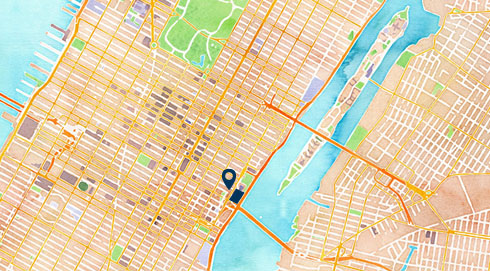
 777 United Nations Plaza, New York