
IPI HomeEventsSpeakers Events › Ed Husain: “You Do Not Tolerate Intolerance—You Challenge It”


print print  |  share share back back

Speaker Events - Tuesday, June 22, 2010

Ed Husain: “You Do Not Tolerate Intolerance—You Challenge It”

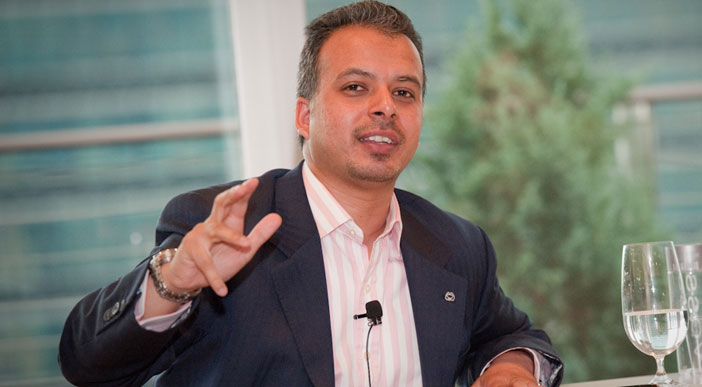
Ed Husain, an English-born Muslim of immigrant parents, spent five years of his life as a radical Islamist in Britain but now heads a think-tank on countering Islamic extremism. In addition, he has written a book called The Islamist: Why I Joined Radical Islam in Britain, What I Saw, and Why I Left, and he is the co-director of the Quilliam Foundation, a counter-extremist think tank in London that seeks to “promote pluralism.”

Husain came to IPI on June 22 to talk about his life, his book, his foundation, and his effort to make sure that other young Muslims in Britain don’t follow the early path he did.

He theorized four reasons for youths becoming radicalized and intolerant of others who don’t share their extreme beliefs—a quest for a comforting identity, the lure of ideology, the exploitation of grievances, and the power of the Internet to disseminate this sense of victimization and need to gain cultural dominance, even if it requires violence.

He said that Britain’s “patronizing” policies towards immigrants isolates them from the mainstream and breeds extremism.

“I think there’s a lot of imperial guilt in Britain—there still is—that we went around, sort of creating empires, and now we should bend over backwards to make sure the children of empire aren’t in some way subjugated. Maybe from my father’s generation that was bright, but I think for my generation, that’s patronizing.”

He said that before the July 7, 2005 bombings in London, Britain was “exceptionally tolerant of the intolerant” and cited examples from his student days, including one incident where his college management agreed to facilitate a mosque on campus for radical students.

“You do not tolerate intolerance—you challenge it,” he said.

The event was moderated by Warren Hoge, IPI Vice President for External Relations.

 Read transcript

The Global Observatory

Interview with Dr. Jagdish Bhagwati, Economist and Professor at Columbia University
Dr. Bhagwati says aid institutions need leaders who will surmount their secretariats, because secretariats tend to be behind the curve.

Key Global Events to Watch in May
A list of key upcoming meetings and events with implications for global affairs.

The Global Observatory is a new website by IPI, providing timely analysis on peace and security issues, interviews with leading policymakers, interactive maps, and more.

Recent Events

May 03, 2012
Shachtman: Cyber Threats Akin to South Bronx, Not Pearl Harbor
“There’s not a danger of a cyber Pearl Harbor… it’s more like the South Bronx circa 1999, where there’s a danger that it becomes such a tough neighborhood that no one wants to set up shop there and people move out,” Noah Shachtman, editor of the Danger Room blog at Wired magazine and non-resident fellow at the Brookings Institution, told an IPI audience at a panel on cyber security on May 3, 2011.

April 27, 2012
Preventing Conflicts in Africa: The Role of Early Warning and Response Systems
An April 27th roundtable discussion at IPI titled “Preventing Conflicts in Africa: The Role of Early Warning and Response Systems” examined the progress, prospects and challenges of regional and international early warning and response mechanisms to monitor, anticipate, and mitigate potential conflict situations in Africa.

April 26, 2012
Swanee Hunt on the Risk of Being “Even-Handed” in Bosnia
“Don’t be afraid to say there is an aggressor here,” Swanee Hunt, Chair of the Institute for Inclusive Security, told an IPI audience while discussing her new book, Worlds Apart: Bosnian Lessons for Global Security. Ms. Hunt served as the US Ambassador to Austria between 1993-97 and hosted negotiations and meetings focused on stabilizing the neighboring Balkan states.

View More