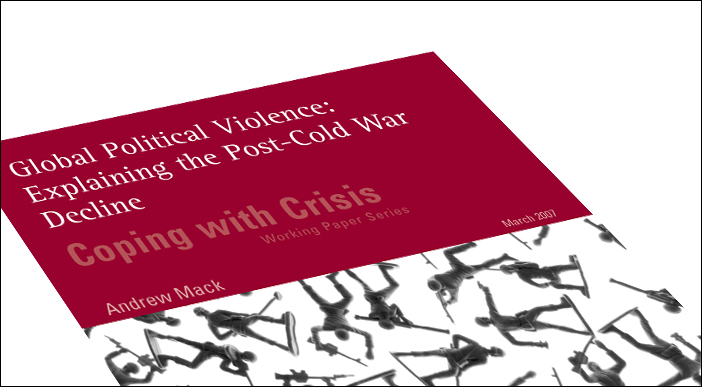
 This paper reviews global trends in political violence since the end of World War II, focusing in particular on the decline in conflict numbers that followed the end of the Cold War. It argues that the single most compelling explanation for this decline is found in the upsurge of peacemaking and peacebuilding activities that started in the early 1990s,was spearheaded by the UN, but also involved many other international agencies, donor governments, and NGOs. The paper also examines trends in war fatalities, which have been declining unevenly since the early 1950s and reviews possible explanations for the change. Trends in civilian deaths from organized political violence—including genocides and terrorism—are also reviewed.
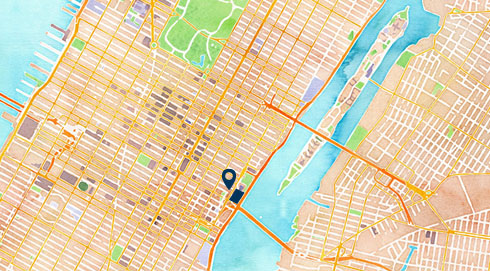
 777 United Nations Plaza, New York